
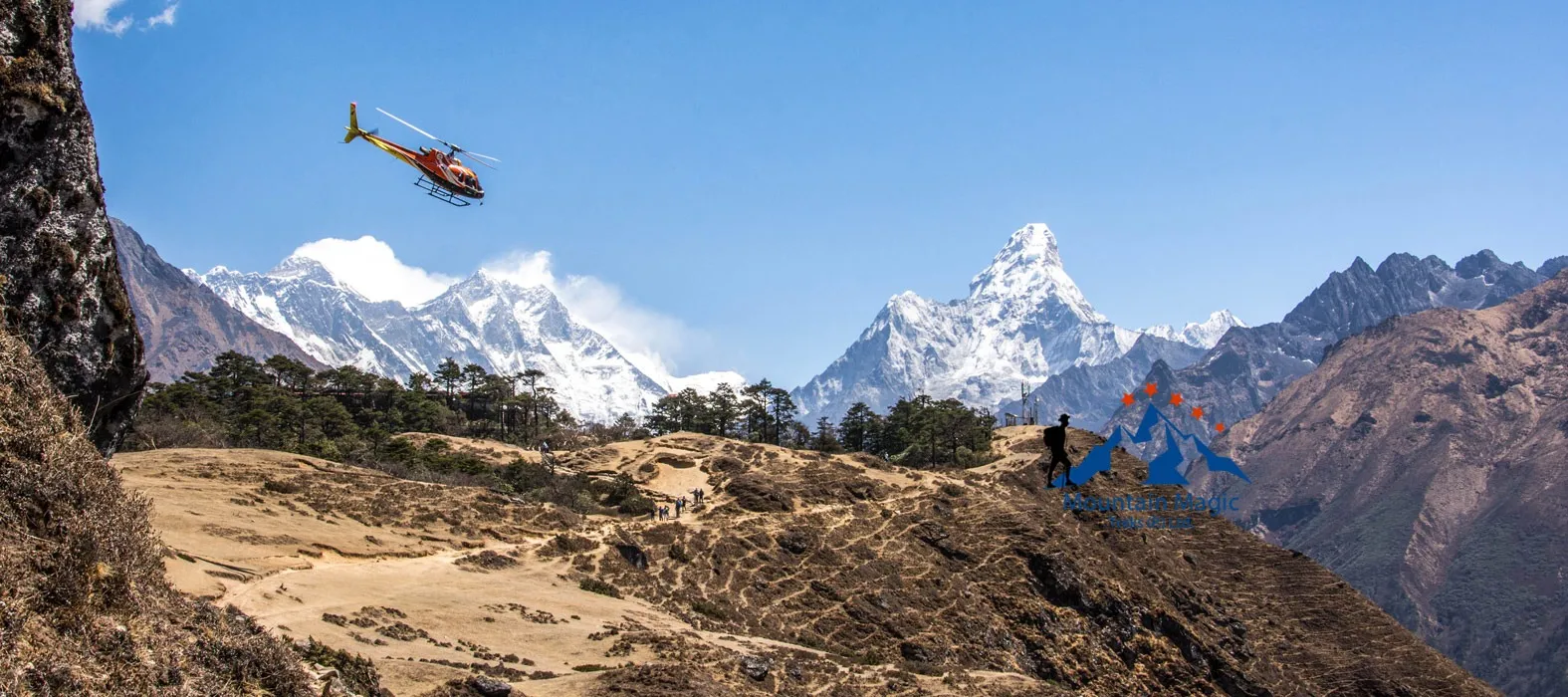
Some journeys are remembered because of where they end. Others stay with you because of everything that happens along the way.
An Everest adventure belongs to the second group.
The Everest Base Camp Trek With Helicopter Return takes travelers through villages, forests, rivers, rocky valleys, and high mountain landscapes before reaching Everest Base Camp. After completing the main trekking section, the return by helicopter adds a completely different view of the Himalayas.
The experience is not only about reaching a famous place. It is about seeing how the world changes as you move higher.
The First Days Feel Surprisingly Different
The trek begins in the lower Khumbu, where the environment is greener and warmer than the high sections later in the journey.
You will pass through small settlements and walk beside rivers while gradually getting used to the trail.
Enjoy the Easy Parts
The first days are a good time to settle into your routine.
Check your backpack.
Make sure your shoes are comfortable.
Find a walking pace that feels natural.
Do not waste energy trying to prove how fast you can walk.
You will need that energy later.
Suspension Bridges Become Part of the Experience
The trail includes several suspension bridges crossing mountain rivers.
For some trekkers, the first bridge can feel exciting or even slightly scary.
Keep Your Steps Steady
There is no reason to hurry across.
Walk at a comfortable pace and follow the instructions of your guide.
Look down at the river if you feel comfortable, but also look around at the surrounding mountains.
These bridges are more than a way to cross the valley. They have become a memorable part of trekking in the Everest region.
Namche Offers More Than Mountain Views
Namche Bazaar is one of the most important stops on the route.
The village sits among mountains and provides a chance to rest before continuing toward higher elevations.
Make the Acclimatization Day Useful
The itinerary includes an acclimatization day in Namche.
You can explore the village, walk around nearby areas, or simply rest.
Do not think you need to spend every hour hiking.
A good meal and proper sleep are just as important.
The goal is to prepare your body for the altitude ahead.
The Trail Also Introduces You to Local Culture
As you move through the Khumbu, you will see more than mountain scenery.
There are monasteries, prayer flags, stone walls, local homes, and villages along the route.
Travel With Awareness
Tengboche is especially known for its Buddhist monastery.
If you visit, remember that it is an active religious place.
Keep your voice low and follow local instructions.
Ask before taking photographs of people.
A respectful traveler gets more from the experience than someone who treats every stop as a photo opportunity.
Dingboche Is Where the Air Feels Different
By the time you reach Dingboche, the environment has changed noticeably.
The trees are fewer, the valley is wider, and the surrounding peaks seem much closer.
Accept a Slower Pace
At higher elevations, walking becomes more demanding.
You may breathe harder.
You may need more breaks.
That is not unusual.
Do not compare your pace with another trekker.
Everyone adjusts differently.
The itinerary includes another acclimatization day at Dingboche, giving you time to prepare before heading higher.
The Landscape Becomes More Powerful
After Dingboche, the green scenery starts disappearing.
The trail becomes rockier, and the mountains dominate almost every view.
Stop Looking at the Distance
Instead of constantly asking how many hours remain, pay attention to what is around you.
Look at the glaciers.
Notice the changing colors of the rocks.
Watch clouds move across the peaks.
Listen to the silence when the trail becomes quiet.
At this point, the landscape itself becomes part of the adventure.
Lobuche Brings the Goal Closer
Lobuche is one of the final major settlements before Gorakshep.
You are now much closer to Everest Base Camp.
Save Your Energy for the High Sections
The excitement can make you want to move faster.
That is usually a bad idea.
The altitude is high, and the trail ahead still requires effort.
Walk steadily.
Take short breaks.
Keep drinking water.
Eat enough food.
Reaching the destination is important, but reaching it in good condition matters more.
Thukla Reminds You to Respect Everest
The trail near Thukla contains memorials dedicated to climbers who died in the Everest region.
It is a quiet section of the route.
Take a Moment Before Moving On
The memorials show that the mountains have another side.
They can be beautiful and inspiring, but they can also be dangerous.
Weather, cold, altitude, and difficult terrain should never be taken lightly.
This is a good point in the journey to remember why preparation and responsible trekking matter.
Gorakshep Is a High-Altitude Base
Gorakshep sits at approximately 5,125 meters.
At this height, even simple movement may feel harder than expected.
Keep Your Daypack Practical
For the walk toward Base Camp, carry only what you need.
A useful daypack may contain:
-
Water
-
Snacks
-
Warm clothing
-
Sunglasses
-
Sunscreen
-
Camera
-
Personal essentials
Avoid filling your bag with things you will not use during the day.
A lighter load can make the trail more comfortable.
Everest Base Camp Is More Than a Photograph
The route from Gorakshep to Base Camp is one of the biggest moments of the trek.
The listed elevation of Everest Base Camp is around 5,364 meters.
Give Yourself Time to Enjoy It
When you arrive, take photographs if you want.
Then look around without your camera.
The Khumbu Icefall and surrounding mountains create a setting that is difficult to understand until you see it yourself.
Think about the distance you have already walked.
You started among green hills and have now reached a high, cold Himalayan landscape.
That change is part of the achievement.
Kala Patthar Adds Another Highlight
The journey continues with the climb toward Kala Patthar.
At approximately 5,545 meters, it is the highest point listed in the itinerary.
Watch the First Sunlight
Many trekkers start early to reach the viewpoint around sunrise.
The cold can be intense, but the changing light makes the climb worthwhile.
The peaks gradually brighten as the sun rises.
Everest and the surrounding mountains can look completely different within a few minutes.
This is a moment worth experiencing without rushing.
The Helicopter Changes the Ending
The final part of the Everest Base Camp Trek With Helicopter Return offers something the walking trail cannot provide.
After spending days at ground level, you can now see the region from the air.
Watch the Trail Shrink Below You
From the helicopter, the landscape becomes easier to understand.
Trails look like narrow lines.
Villages appear tiny.
Large valleys connect into a single view.
The mountains that felt enormous while walking suddenly become part of a much larger landscape.
It can be a powerful way to finish the adventure.
Mountain Flights Need Flexibility
Helicopter operations depend on weather conditions.
Clouds, wind, and visibility can affect the timing.
Do Not Build a Tight Schedule
If you are catching an international flight after returning to Kathmandu, leave extra time between the expected helicopter arrival and your departure.
Mountain travel does not always follow a perfect timetable.
A flexible plan can prevent unnecessary stress.
The Journey Is Bigger Than the Destination
The Everest Base Camp Trek With Helicopter Return is often described by its final destination, but that does not tell the whole story.
The real experience begins long before Base Camp.
It is the sound of the river below a suspension bridge.
It is the first clear mountain view from Namche.
It is the peaceful setting around Tengboche.
It is the thin air of Dingboche.
It is the rocky trail toward Lobuche.
It is the silence around the high valleys.
And finally, it is the feeling of looking down from a helicopter at the trail you walked for days.
What Makes the Experience Stay With You
The mountains may be the main attraction, but the smaller moments often become the strongest memories.
You learn to walk patiently.
You learn to respect altitude.
You meet people who live in an environment very different from your own.
You see the landscape change step by step.
Then the helicopter gives you one final chance to see everything together.
The Everest Base Camp Trek With Helicopter Return combines a close, ground-level Himalayan experience with a memorable aerial finish.
You do not simply visit Everest.
You experience the journey that leads there.
FAQs
How high is Everest Base Camp?
The listed elevation is approximately 5,364 meters.
What is the highest point on the itinerary?
Kala Patthar is approximately 5,545 meters above sea level.
Where are the acclimatization days?
The itinerary includes acclimatization days in Namche Bazaar and Dingboche.
Is Everest Base Camp reached by walking?
Yes. Travelers complete the main trekking route to Base Camp on foot.
What is the purpose of the helicopter return?
It avoids the need to retrace the entire route on foot and provides an aerial view of the Khumbu.
Can weather affect the helicopter?
Yes. Mountain weather can affect helicopter operations, so travelers should keep some flexibility in their schedule.
